
Teachers see one classroom. The support team sees all of them. A school counselor, a school psychologist, an occupational therapist, and an intervention team each carry a caseload that crosses classrooms, grades, and buildings — and the work is only as good as the records behind it. A session that is not written down is a session that did not happen, as far as the file is concerned. A school counselor planner is the tool that keeps that record straight.
Support work has its own paperwork shape: students across many classes, sessions that repeat weekly, interventions that run for six weeks and then need a decision, and meetings where someone asks "what have we tried so far?" and expects an answer with dates. That is the load a school counselor planner is built to carry. A school counselor planner built for that shape keeps the team organized in a way a general teacher planner cannot. These five trackers cover the support team's year: the counselor's plan, the counselor's forms, the psychologist's caseload, the OT's sessions, and the intervention record that ties them together.

1. School Counselor Planner — the counselor's year in one place
A counselor's day is appointments, groups, classroom visits, crisis calls, and paperwork — in no predictable order. The School Counselor Planner gives that day a structure: the caseload, the session schedule, the groups, the notes, and the follow-ups, all in one planner instead of spread across a diary, a spreadsheet, and a pile of sticky notes. The habit is the same as for any planner: plan the week on Friday, check the day each morning, and write the note before the next student walks in. It suits school counselors carrying a full caseload and anyone new to the role who needs a system from day one.
Shop the School Counselor Planner: Shop on Etsy
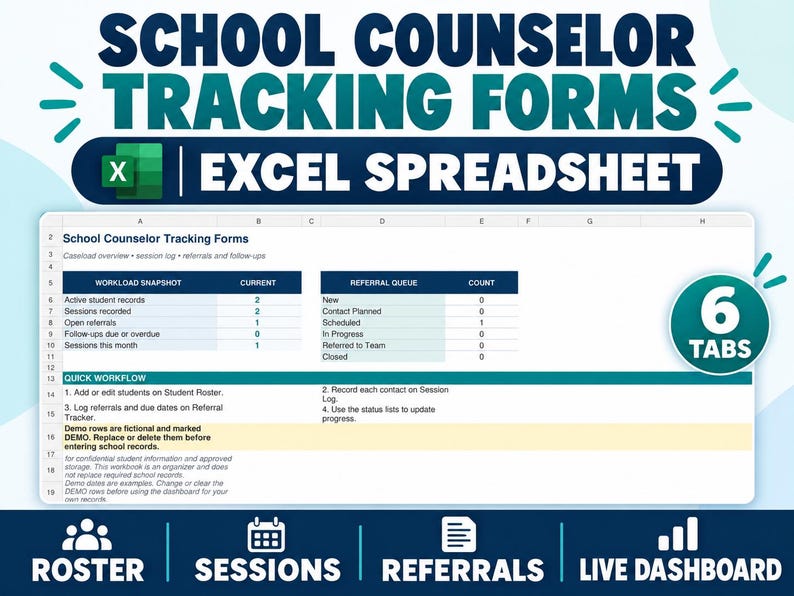
2. School Counselor Tracking Forms — the record behind the session
A planner holds the schedule; tracking forms hold the evidence. The School Counselor Tracking Forms are the pages a counselor fills in session by session: who was seen, what was discussed, what was agreed, and what happens next. Kept consistently, they answer the questions that come up later — how often a student has been seen, what has already been tried, and whether the support is working. They also protect the counselor: a dated record is worth more than a remembered conversation when a parent, a principal, or a review asks what happened. Use one form per session, file it the same day, and the record builds itself.
Shop the School Counselor Tracking Forms: Shop on Etsy
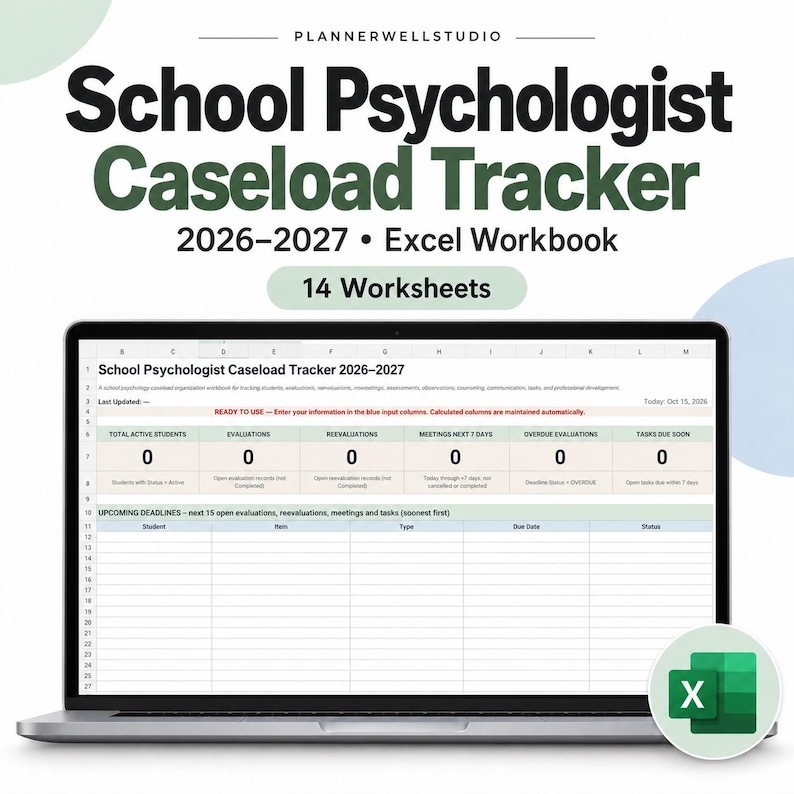
3. School Psychologist Caseload Tracker — assessments, reports, and deadlines
A school psychologist's caseload is a queue of evaluations, reports, and meetings, each with its own deadline. The School Psychologist Caseload Tracker keeps that queue visible: which students are waiting for assessment, which reports are in progress, which meetings are scheduled, and which deadlines are coming up. When a new referral arrives, the tracker shows where it fits instead of adding to a mental pile. When a deadline moves, the tracker shows what moves with it. It suits school psychologists managing a full evaluation caseload and anyone who has to answer, at any moment, where each case stands.
Shop the School Psychologist Caseload Tracker: Shop on Etsy
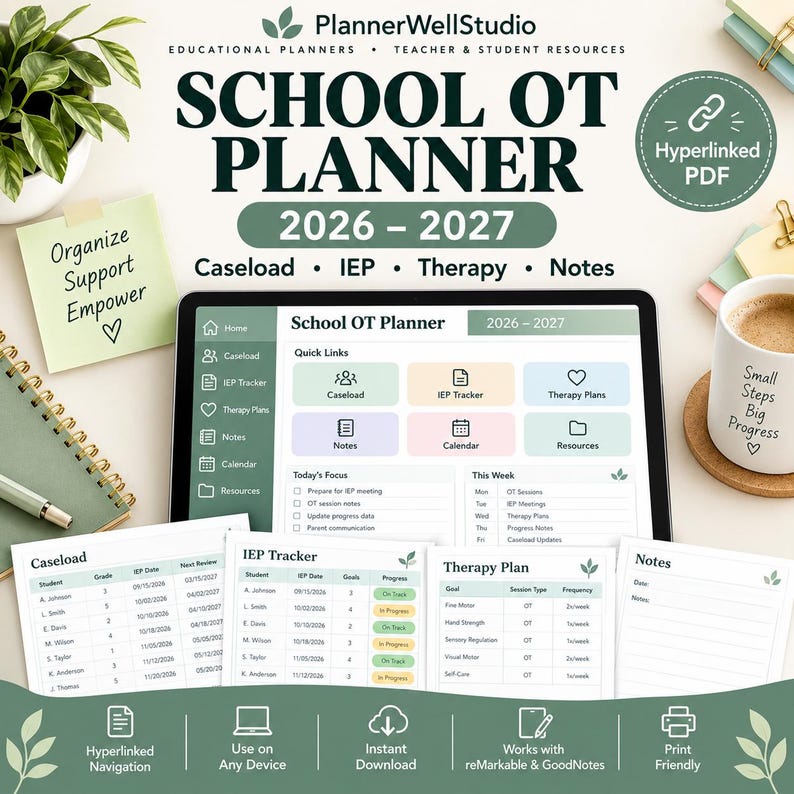
4. School OT Planner — sessions, goals, and progress in one book
Occupational therapy in schools is sessions across many classrooms, goals that change slowly, and progress that needs showing. The School OT Planner is built for that rhythm: the caseload, the session schedule, the goals for each student, and the notes that show what changed. An OT who sees a student twice a week across a whole school needs to know, on the day, what the last session covered and what this one should do — and the planner answers that in one open page. It suits school occupational therapists and any specialist whose work is measured in small, steady gains over a term.
Shop the School OT Planner: Shop on Etsy
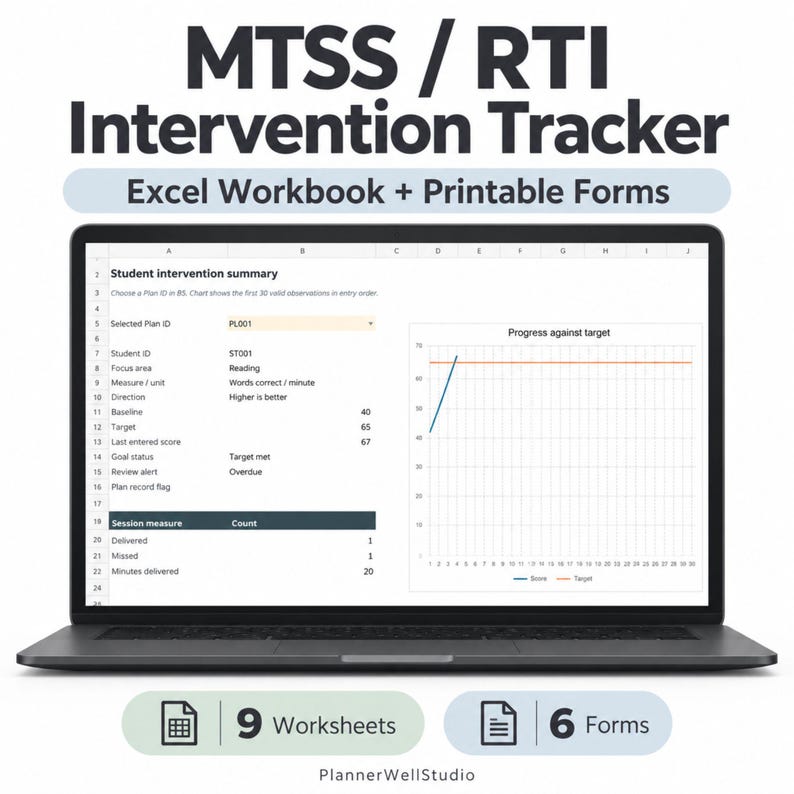
5. MTSS RTI Intervention Tracker — what was tried, and did it work
Interventions only work if someone can say what was tried, for how long, and what changed. The MTSS RTI Intervention Tracker is the record for that question: the student, the tier, the intervention, the start date, the progress-monitoring data, and the review date when the team decides whether to continue, change, or move the student up a tier. Without a tracker, intervention meetings run on memory and opinion. With one, they run on data — and the decision at the review is faster, fairer, and easier to explain to a parent. It suits intervention teams, RTI coordinators, and any school running a tiered support system.
Shop the MTSS RTI Intervention Tracker: Shop on Etsy
One team, one record
The five trackers share one rule: write it down the day it happens. The counselor's session note, the psychologist's case status, the OT's session record, and the intervention data all lose value every day they wait to be written. Keep the record current, and the support team can answer any question about any student with dates instead of guesses — which is, in the end, what the whole team is for.



0 Comments