
A school social worker's caseload does not sit in one classroom. It walks the whole building: a student in crisis at 9 a.m., a parent phone call at 10, a teacher consult squeezed between classes, a home visit after lunch, and a meeting where everyone asks what has been tried so far. When the information about each student lives in five different places, the worker spends the day hunting paper instead of helping people.
A caseload binder fixes that. One organized place for every student's key information, built for a job that moves.
What Makes Social Work Caseloads Different
Teacher binders are organized around classes and lessons. A social worker's binder is organized around people and services:
- Students join and leave the caseload all year, not just in September
- Each student has a different mix of services: check-ins, groups, family support, referrals
- Much of the record is contacts — who you spoke to, when, and what was agreed
- Confidentiality rules are strict, and the binder has to respect them
That last point matters. A caseload binder holds brief working notes and organization tools, not your full clinical record. Follow your district's rules about what belongs in a working binder and what belongs in the official file.
The Sections That Earn Their Place
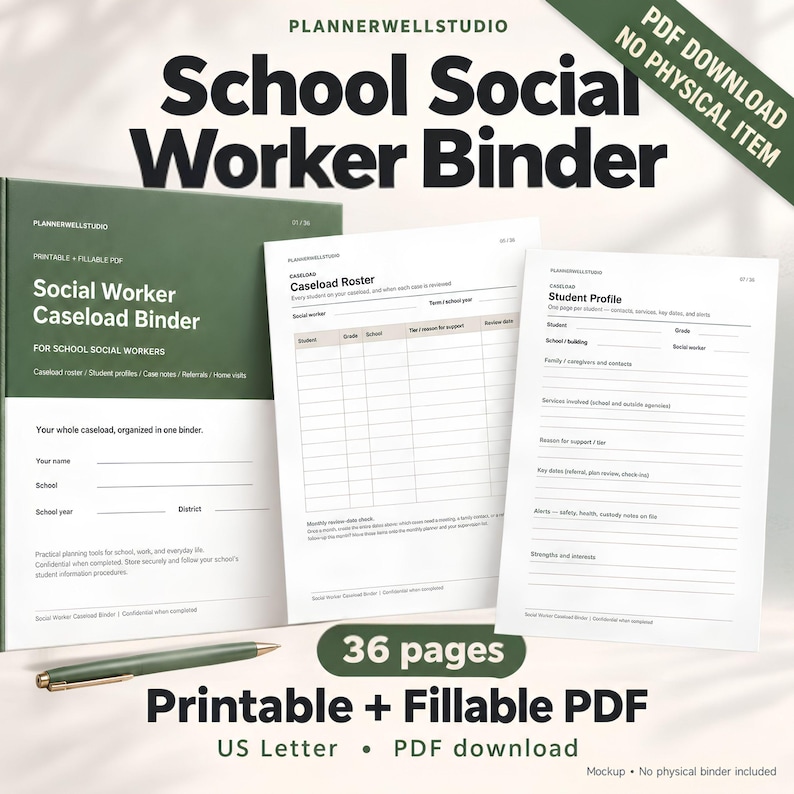
1. Caseload overview. One page for the whole caseload: student name, school or grade, service type, session day, and a status note. This is the page you scan at 8 a.m. to plan the day.
2. Student snapshot. One page per student: contacts for family and teachers, the reason for referral in one line, current goals, and the services in place. When a teacher stops you in the hallway, this page is the answer.
3. Session and check-in notes. Short dated notes after each contact: what was worked on, what you observed, and the next step. Brief and factual — two or three lines recorded the same day beat a paragraph written from memory on Friday.
4. Contact log. Parent calls, teacher consults, agency contacts: date, person, topic, and follow-up agreed. If it is not in the log, it did not happen — and in meetings, the log is what turns "we have been in touch" into a clear record.
5. Referral tracker. Community resources, referrals made, dates, and outcomes. Families ask "what happened with that referral?" — this page answers without a scramble.
6. Meeting notes. IEP, 504, and student-support meetings: date, decisions, and your action items separated from everyone else's.
7. Planning pages. A monthly calendar for groups and recurring check-ins, a weekly planning page, and an important-dates list for reviews and deadlines across the caseload.
A System You Will Actually Maintain
The binder only works if updating it is fast. Three habits make it stick:
- Same-day notes. Write session and contact notes before you leave the building. Five minutes now saves an hour of reconstruction later.
- One page per job. Snapshots, logs, and trackers each have a single home. When a page has two jobs, information hides.
- A Friday ten-minute reset. Update the caseload overview, move closed cases out, and add new students in. The overview page should never be more than a week old.
Paper, Digital, or Both
Many school social workers keep the binder as a hyperlinked PDF on a tablet — private, searchable by tab, and easy to carry between rooms. Others print the logs and trackers and keep them in a physical binder in a locked cabinet. Both work. The right choice is the one that matches your building's privacy rules and your own habits.
If you want the sections above ready to use, my Social Worker Binder pulls them into one printable and tablet-ready system: caseload overview, student snapshots, session notes, contact logs, referral tracker, meeting pages, and planning pages in US Letter and A4.
Start Small
Do not rebuild everything in one weekend. Start with the caseload overview and one snapshot per student this week. Add the contact log next week. A binder that grows in layers stays organized; a binder built in one heroic afternoon usually does not.



0 Comments