
The session ends, the next one starts in ten minutes, and the notes for the first are still in your head. Every RBT knows this moment. Session notes written late get shorter, vaguer, and less useful — and they are not just paperwork. They are the record your BCBA supervises from, the data behind plan changes, and the proof of what was actually worked on.
Good session notes are not long. They are specific, written the same way every time, and finished before you leave the room.
What a Complete Session Note Contains
The basics, every time. Date, session start and end time, setting, and who was present. Boring — and the first thing anyone auditing the record looks for.
Targets worked on. Which programs and goals from the plan were run, in plain names that match the plan. If a target was not run, that is fine — but note why ("learner absent for part of session," "fire drill").
Data summary. The numbers that matter: trials correct, prompt levels, or a short frequency count, depending on the program. The full data sheets hold the detail (see Behavior Data Collection: Simple Sheets That Work); the note summarizes the headline result.
Behavior notes. What happened, briefly and factually: the behavior, roughly when, what came before it, and what you did. This is the ABC habit in miniature — I covered the full method in ABC Data Sheets Explained.
What worked, what did not. One honest line each. "Token board kept pace well." "New matching set — too many choices, will reduce to three." These lines are gold for your BCBA.
Next session. Materials to prepare, a target to repeat, a prompt level to fade. Future-you, ten minutes before the next session, will be grateful.
The Five-Minute Note Routine
1. Minute 1: Basics and targets — check them off while the session is still in front of you.
2. Minutes 2–3: Data summary from your sheets, not from memory.
3. Minute 4: Behavior notes, factual and short.
4. Minute 5: One line each for what worked and what is next. Sign off.
If a note regularly takes longer than five minutes, it is trying to be an essay. Cut it back to the record.
Write Facts, Not Stories
Two versions of the same moment:
- Story: "He had a really hard day and did not want to work at all."
- Record: "Declined table work 4 times in the first hour (verbal refusal, pushed materials away). Completed work after a 2-minute break and choice of order. Best performance in the last 30 minutes."
The record version is shorter, kinder, and far more useful. Describe what you saw and counted; leave conclusions about mood and motivation to the data trend.
Keep Notes and Data Together
Notes that live in one notebook and data sheets in another drift apart fast. One session binder — data sheets, note pages, and the learner's key information in a single section per learner — keeps the pair together and makes supervision meetings simple: open the section, and the whole session story is there.
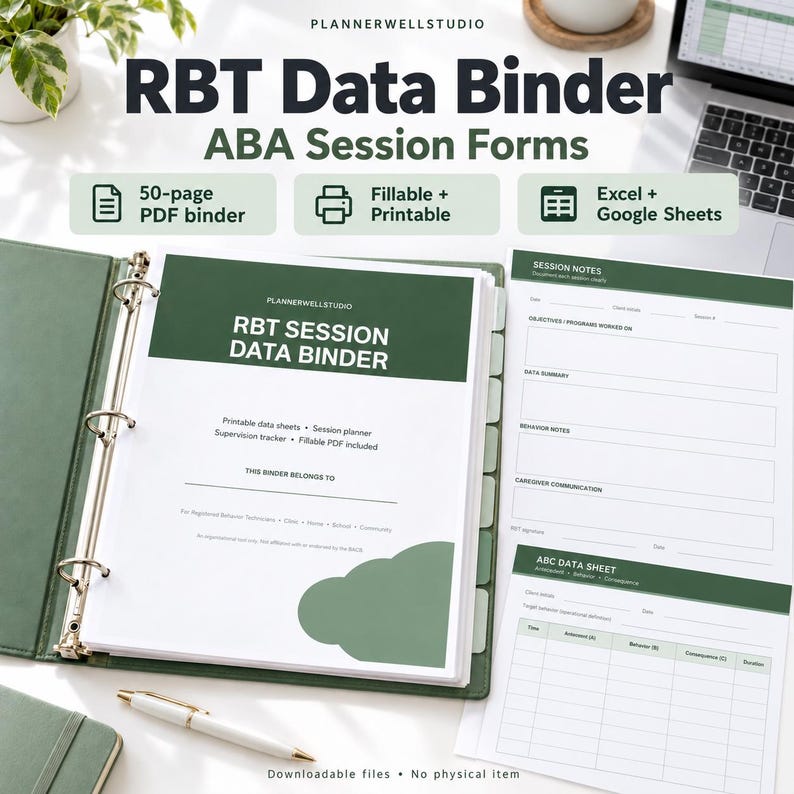
My RBT / ABA Session Data Binder is organized exactly that way: per-learner sections with ABC sheets, frequency and duration forms, session note pages, and supervision trackers in printable and tablet-friendly formats.
A Note on Privacy
Session notes name real children and real behavior. Keep the binder with you, store it where your employer requires, and never photograph note pages on a personal phone. The fastest note system in the world is not worth a confidentiality breach.
Read next
Behavior Data Collection: Simple Sheets That Capture What Matters



0 Comments