
A teacher planner printable can make your school year calmer, but only if the layout fits the way you actually work. A planner with the wrong layout ends up empty by October, while the right one gets used every single day. Before you print anything, it helps to think about how your days are built, what you need to record, and whether you want paper, a digital planner, or a mix of both.
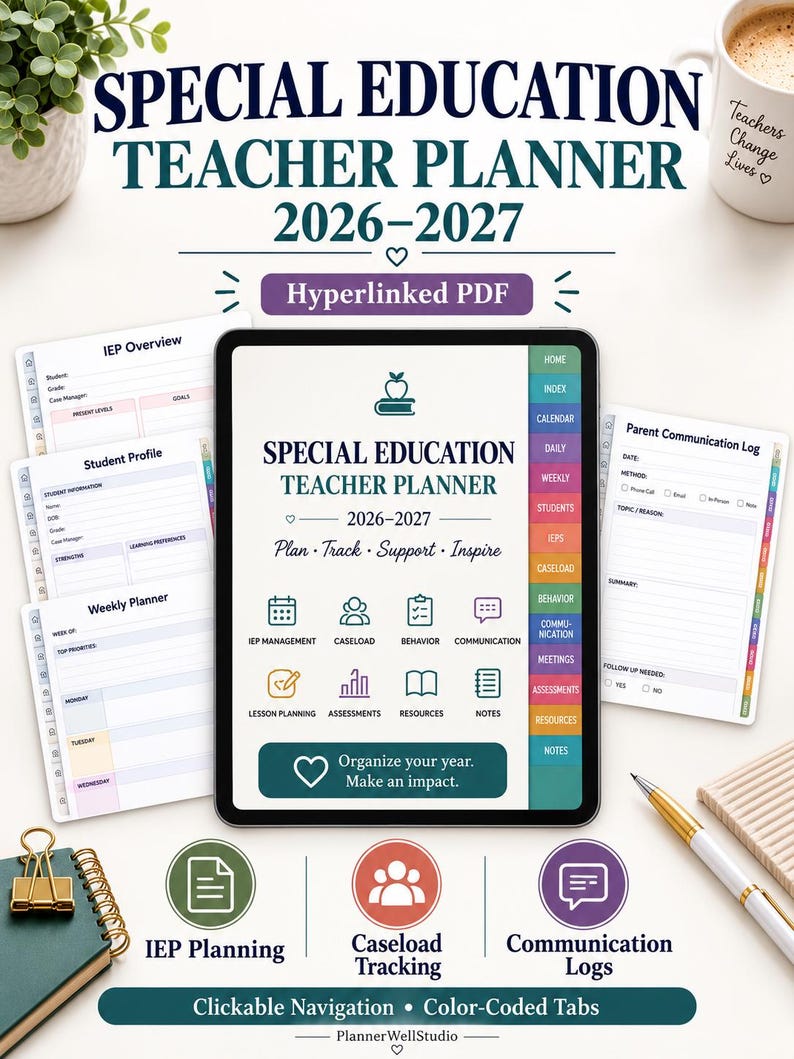
Start with your teaching day. No two teaching jobs look the same. A classroom teacher with one group all day needs something different from a specialist who moves between rooms, or a special education teacher who tracks services, meetings, and paperwork for many students. Ask yourself three questions: 1. How many groups or classes do I teach each day? 2. What do I need to write down most often: lesson plans, student notes, meetings, or deadlines? 3. Do I plan one day at a time, or do I like to see the whole week at once? Your answers point straight to the layout that will work for you.
Daily pages: when every hour counts. A daily planner printable gives you one full page for one day. That space is useful when your day is broken into many periods, when you teach several different groups, or when you need room for detailed notes about individual students. Daily pages work well if you: teach five or more periods a day; write detailed lesson steps for each class; record observations, behavior notes, or service minutes during the day; prefer to focus on today only, without the rest of the week distracting you. The trade-off is size. A full year of daily pages is a thick binder. If you only need a few lines per day, a daily layout gives you more paper than you will use.
Weekly pages: when the big picture helps. A weekly planner printable shows the whole week on one spread. This layout suits teachers who plan in weekly blocks, who teach the same plan to several classes, or who want to see meetings, duties, and deadlines side by side. Weekly pages work well if you: plan lessons for the week ahead on Sunday or Monday; teach the same lesson to multiple groups; want to spot a busy week before it arrives; prefer a lighter binder you can carry easily. The trade-off is space. Each day gets only a small box. If you need long notes for each period, a weekly box will feel cramped, and you may end up writing notes somewhere else anyway.
A simple way to choose. If you are still unsure, try this test. Take one normal school week and notice where your notes go. If you fill a page a day with plans and notes, choose a daily layout. If your notes fit in a few lines per day and you mostly need the overview, choose a weekly layout. Many teachers use both: a weekly spread for the overview, plus daily pages only for their busiest days, or a daily page for a class that needs closer tracking.
Paper, digital, or both. A paper planner is quick to open, easy to glance at during class, and never runs out of battery. A digital planner on a tablet can be searched, copied from week to week, and carried without weight. An assignment tracker works in either form: on paper it sits open on your desk, and in a digital planner it can link to the dates you need. There is no rule that says you must pick one. A common setup is a paper weekly spread for planning, plus a digital planner or a simple spreadsheet for tracking that grows over the year, such as grades, service logs, or assignment records. The best system is the one you will still be using in February, not just in the first week of school.
What to carry, and what to leave out. A planner that tries to hold everything becomes heavy and confusing. Keep your daily carry simple: this week's plans; today's notes and reminders; a short list of upcoming deadlines and meetings; one tracking sheet for the thing you record most, such as an assignment tracker or a student log. Leave the rest at your desk or in a separate binder: last month's plans, full student files, and reference material you rarely open. A planner should help you teach, not add weight to your bag.
Before you print the whole year. Print one week first and use it for five real school days. Notice what you actually wrote, which boxes stayed empty, and what you wished had more room. Then adjust: change the layout, add a notes page, or drop a section you never touched. Printing a test week saves a lot of wasted paper and gives you a planner shaped around your real routine. The right teacher planner printable is not the one with the most pages. It is the one that matches your day, holds what you need, and stays open on your desk all year.
Browse planners, binders, and trackers at the PlannerWellStudio Etsy shop: https://plannerwellstudio.etsy.com — You can also find them at the PlannerWellStudio Payhip store: https://payhip.com/PlannerWellStudio



0 Comments